
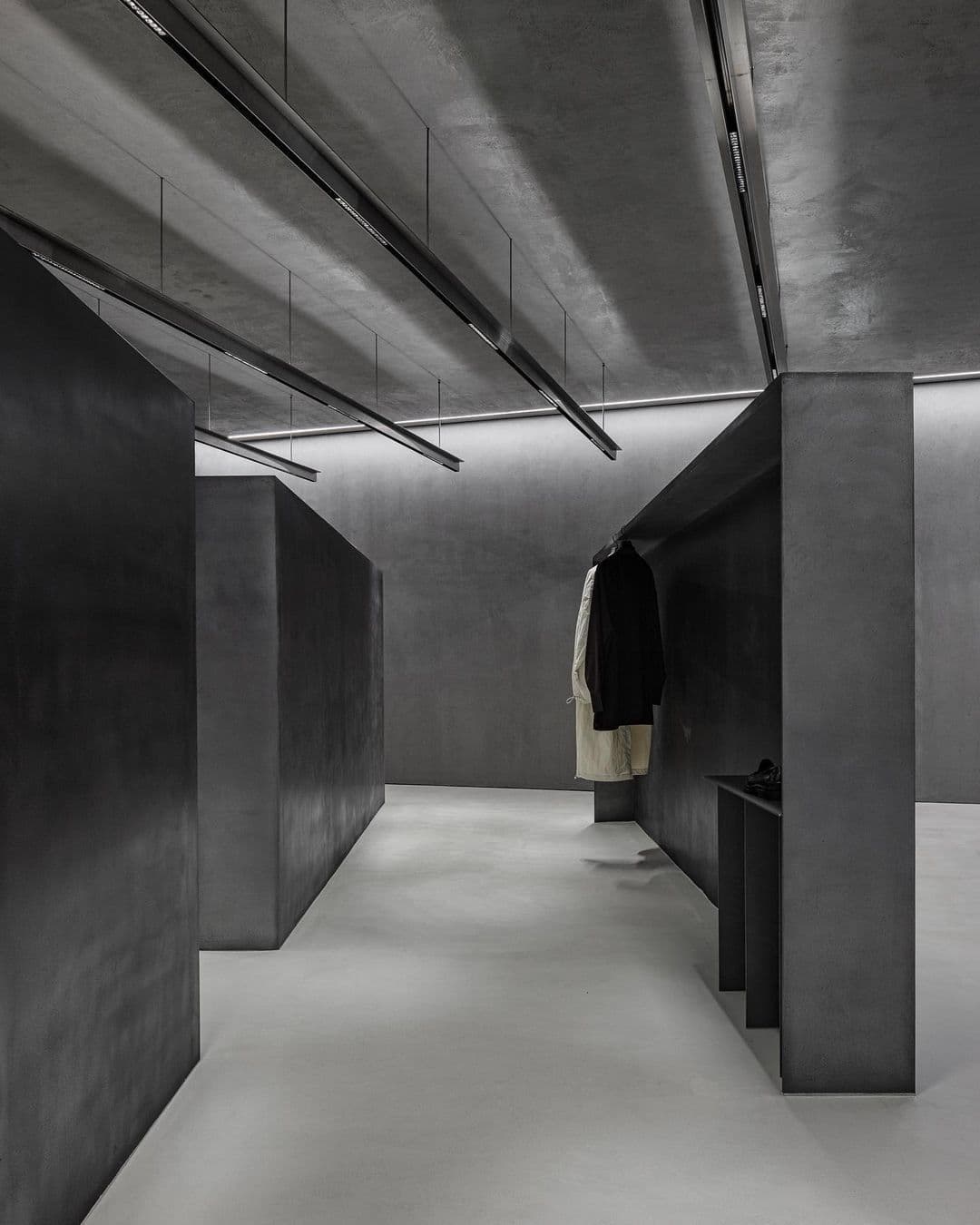
For a prestige Maison, closing a boutique for three months of works is not an option. Client traffic, commercial calendars and the brand’s visibility on its street or within its mall gallery call for a different approach: renovation in occupied premises.
A different way of reading the project
A project in occupied premises cannot be run like a conventional site. It is divided into isolated zones, scheduled in staggered hours, documented down to each decision. The boutique director, the Visual Merchandising teams and the Maison’s VIP clients continue to inhabit the space while the master artisans work alongside them or at night.
Depending on the brief, Krapted works with three main approaches:
- Night works: intervention between 9 pm and 7 am, handed over cleaned for opening
- Partial closure: one floor or area closed, the rest of the boutique remains open
- Weekend phases: work from Friday 9 p.m. to Monday 10 a.m. over successive weeks
What this requires from the brand as project owner
A successful renovation in occupied premises begins with alignment between the general contractor, the boutique management and Visual Merchandising. Not with a construction schedule imposed from above.
The Maison must accept three constraints:
- A project duration extended by 20 to 40% compared with a closed-site project
- An intervention cost increased by 15 to 25% for night work and enhanced protections
- Disciplined teamwork: a dedicated boutique contact on the brand side, reachable at all times
In return, the boutique’s revenue is maintained throughout the duration of the project. For a Paris flagship whose monthly takings often exceed one million euros, the equation quickly becomes favourable.
Protections that change everything
The difference between a well-managed project in occupied premises and a project that undermines the client experience lies in what cannot be seen: site protections. Krapted enforces a protection standard that is more demanding than the market norm:
- Temporary acoustic partitions between work areas and sales areas
- Permanent HEPA vacuum systems to contain fine dust
- Dedicated access for artisans, separate from client and boutique staff access
- Thorough cleaning at the end of each night phase, before opening
- Off-site storage of materials, phased deliveries by batch
These safeguards are invisible at handover. They are measured by the absence of incidents over the twelve weeks of the project.
The commercial calendar sets the pace
The schedule for a renovation in occupied premises is not set around the comfort of the master artisans. It is set around the brand’s calendar: fashion week, collection launches, VIP events, the holiday season. An intervention planned for 25 December is rescheduled. A delivery promised for 1 February is honoured.
Krapted records every scheduling decision together with the boutique director. Each week, a coordination meeting realigns the phases, adjusts access, and confirms the intervention areas for the following week. The project owner keeps full visibility, and the site keeps its pace.
When not to attempt work in occupied premises
There are three situations where working in occupied premises should be ruled out from the outset:
- Structural demolitions (floors, load-bearing walls, slab openings)
- Major HVAC works requiring extended shutdowns
- Renovations covering more than 70% of the boutique’s floor area
In these cases, a full closure for 6 to 10 weeks remains preferable. The loss of revenue is lower than the additional cost of an extended renovation in occupied premises.
Presenting a retail project to Krapted means opening the discussion on how it will be delivered before talking numbers. Not the other way around.